Recently we had the pleasure of welcoming one of our passive fire contractors into the Valen office in Alexandria to deliver an in-depth fire training session for our team.
The session provided a valuable opportunity to step beyond theory and into practical application. Our team gained hands-on experience with passive fire protection systems building a clearer understanding of how these systems perform in real-world conditions and how they differ from active fire systems. Just as important, the training reinforced how critical it is to correctly identify defects assess compliance and implement appropriate remedial solutions.
Fire safety is not just about meeting regulatory requirements. When done properly, it contributes to better coordinated projects reduces rework minimises risk and ultimately leads to stronger outcomes for clients and stakeholders. Sessions like this ensure our team continues to approach fire order and remedial projects with confidence technical accuracy and a strong focus on compliance.
A key part of the training focused on recognising common installation issues and understanding how they should be rectified. These scenarios reflect the types of challenges frequently encountered on-site, particularly in complex or legacy buildings where services access constraints, and previous non-compliant works, all need to be carefully addressed.
Here are some of the examples we explored during the session that highlight both compliant and non-compliant passive fire installations, along with commentary on the issues identified and how they were rectified:
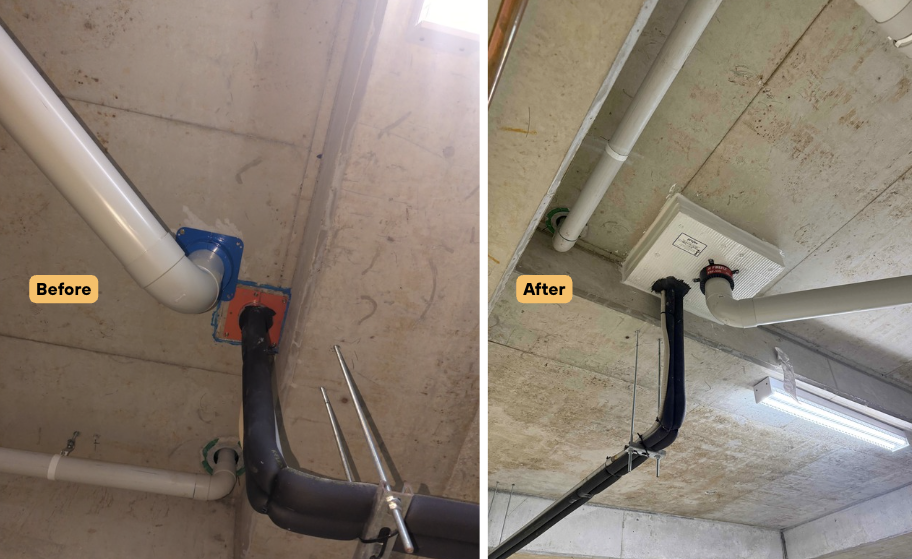
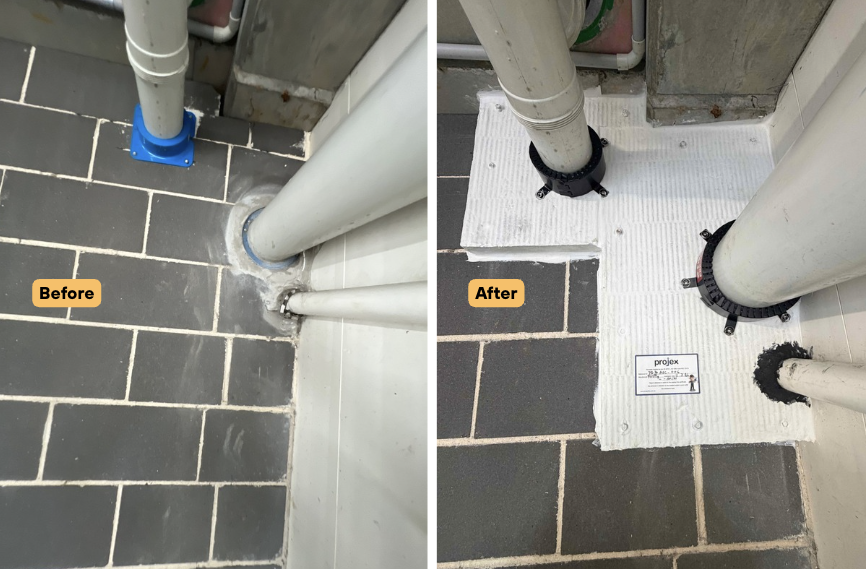
6: Non-compliant collar systems replaced with a batt mastic and collar solution.
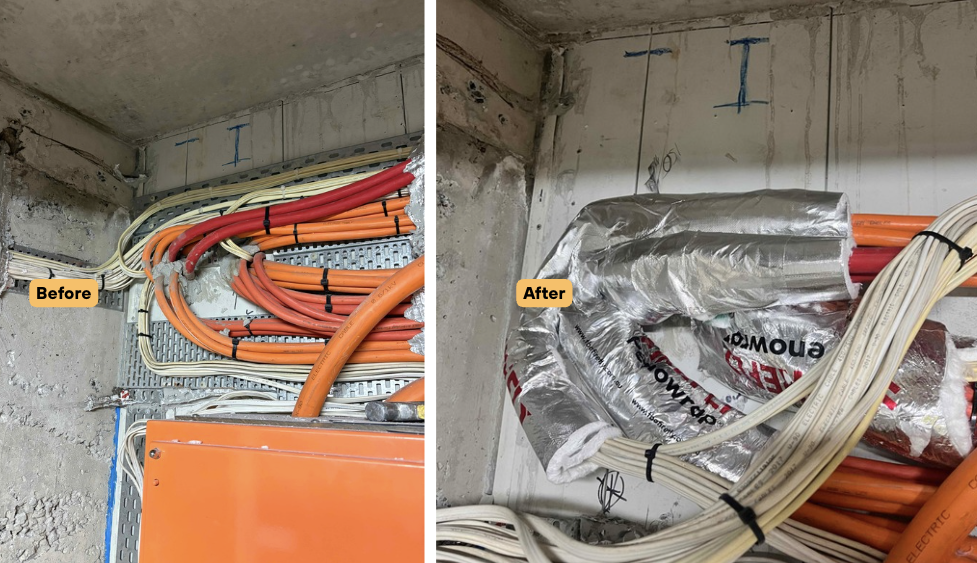
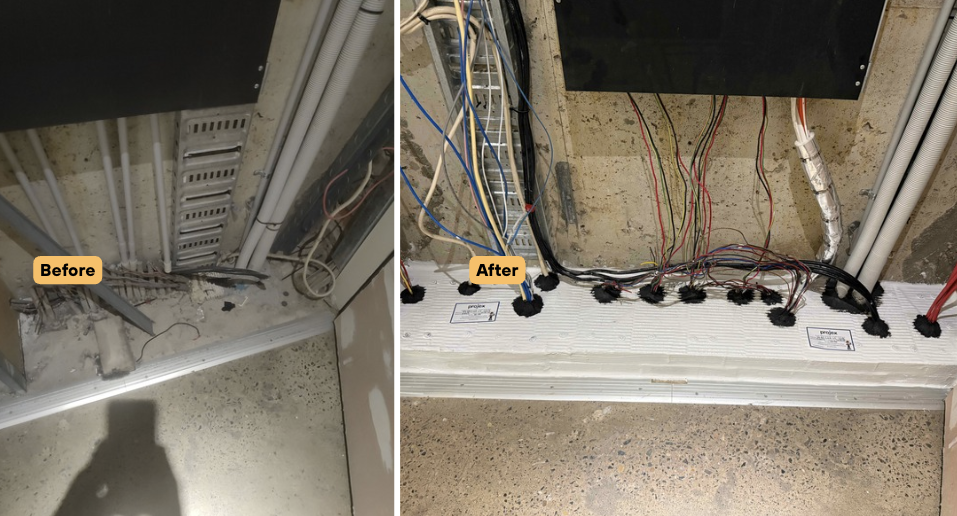
8: Electrical riser with multiple services and inadequate fire stopping. A retrofit batt and mastic solution was installed to all penetrations.
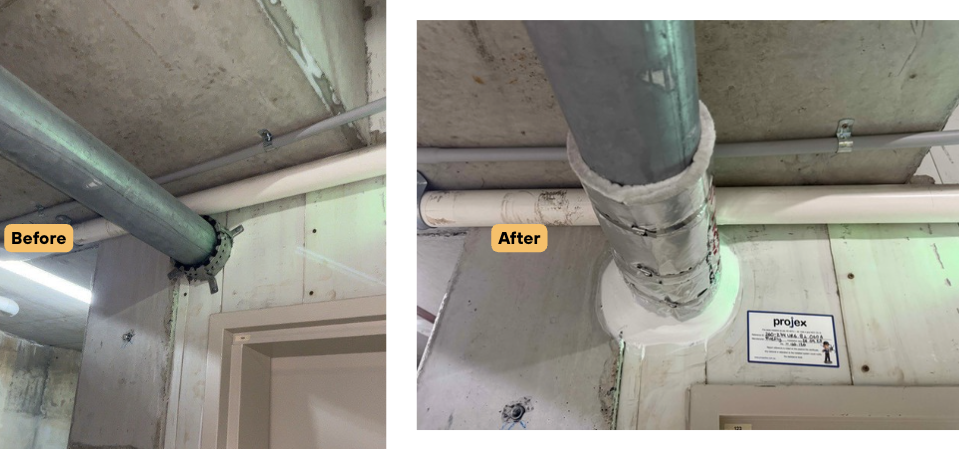
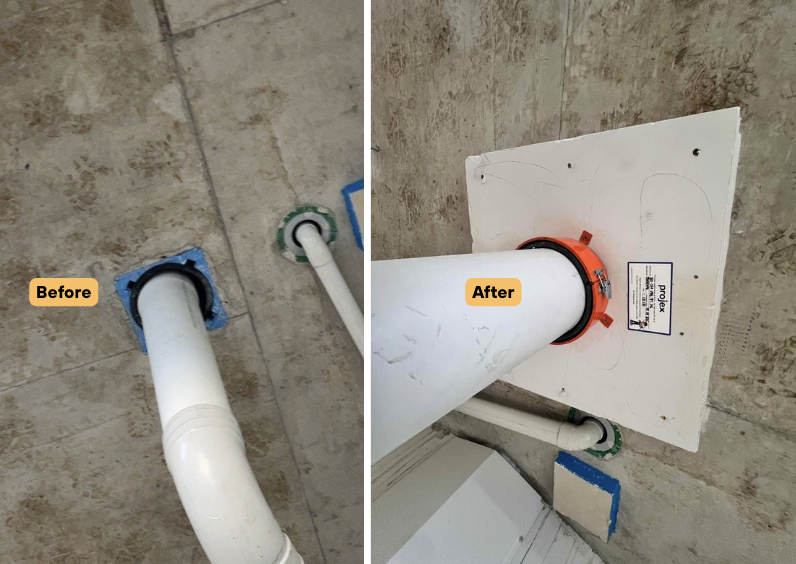
16: Cast-in collar missing a heat spreader. A retrofit board and collar solution was installed.
39: Non-compliant protection to an air conditioning service replaced with a batt mastic and collar system.
49: Inadequate mastic used for cable penetrations. Removed and replaced with a compliant mastic and wrap solution.
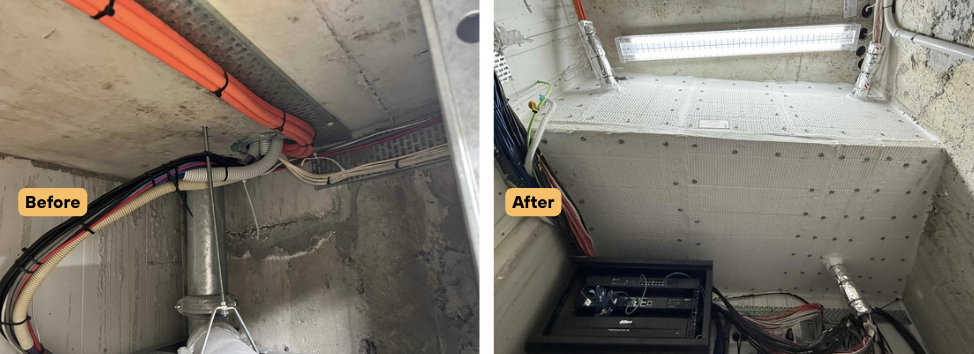
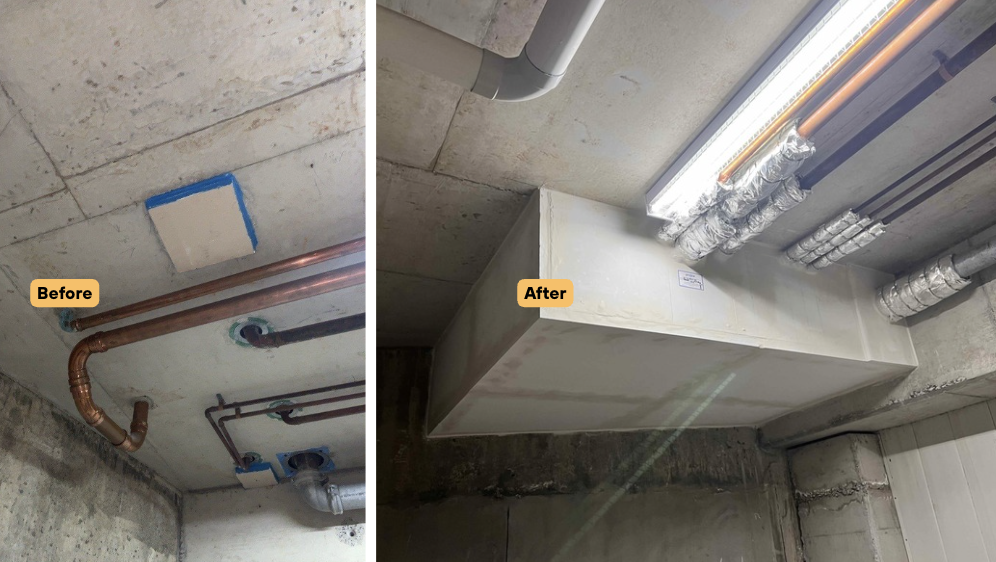
54: Multiple services penetrating the soffit with no access above. A bulkhead was constructed to enable treatment of all services.
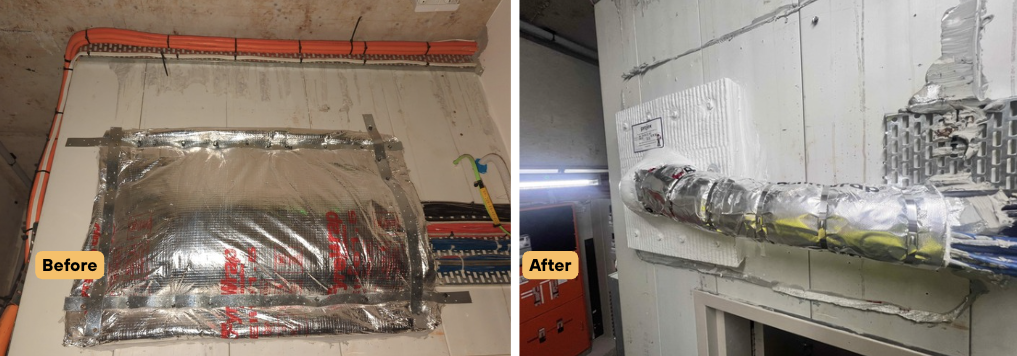
57: Non-compliant wrap solution replaced with batt and wrap to protect electrical cables.
60: Non-compliant retrofit replaced with a compliant mastic and wrap solution.
61: Similar to 54: a bulkhead was installed to treat all services.
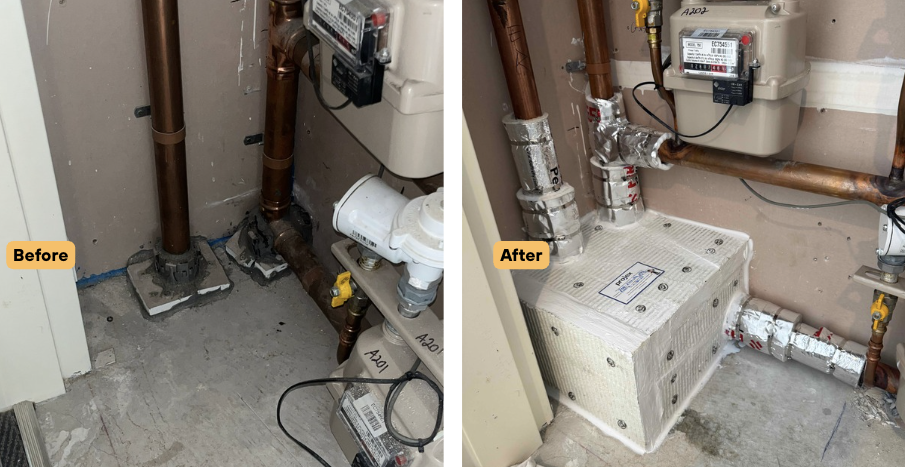
75: Non-compliant protection to copper pipes replaced with a compact bulkhead solution due to space constraints.
86: Collars were not tested for the wall type nor were the fixings permitted. Replaced with collars tested for a Dincel wall with compliant fixings.
90: Similar to 75: a board and wrap solution was installed due to limited space.
Training like this reinforces the importance of getting the details right (important!) Passive fire protection is often out of sight, but it plays a critical role in the overall performance of a building in the event of a fire. Identifying and rectifying non-compliant installations early not only improves safety but also avoids costly remediation down the line.
We would like to thank the contractors we partner with on all projects for sharing their expertise with our team and continuing to support industry knowledge and best practice!