
Valen is extensively knowledgeable in passive fire protection services, dedicated to ensuring the safety and compliance of your building. We manage a range of services, including coordination of annual passive inspections, site surveys, and the creation of passive registers. Our experienced team is committed to determining tailored solutions to any defects found during inspections and we arrange detailed quotes for rectification work. With Valen, you can have peace of mind knowing that your building follows fire safety regulations and that your occupants are afforded greater protection in the event of a fire.
Are Passive Registers Mandatory?
A passive register is a baseline dataset of information for a building against which fire services contractors can assess the status and performance of a particular asset or fire safety measure.
Currently passive registers are not mandatory under AS1851, however, if the measure for firestopping is listed on your AFSS, the expectation is that all passive firestopping is compliantly installed within buildings and you should be able to demonstrate this.
As a part of improvements to the Building Fire Safety Regulation undertaken in 2022/23 by the NSW Government, they have nominated that AS1851 will be mandated from February 2025 (*now Feb 2026). For passive fire this means that all buildings that have firestopping as a listed measure on the AFSS should have a register (baseline data) against which the asset is tested and signed off annually. It is noted that under Amendment 1 of AS1851, the standard no longer calls explicitly for a passive register however like any other asset in the building (detectors/extinguishers or otherwise) the asset register still needs to be formulated. Therefore it is highly recommended to obtain a register to form the baseline data for your building and ensure that as a building owner you hold this record (not just the fire servicing company).
How do we go about formulating a passive register?
First we will need to understand the compartmentalisation of your building to determine which areas need to be separated from the rest of the building (fire stairs/egress paths etc). Once this is determined we can document all of the penetrations or defects between these areas.
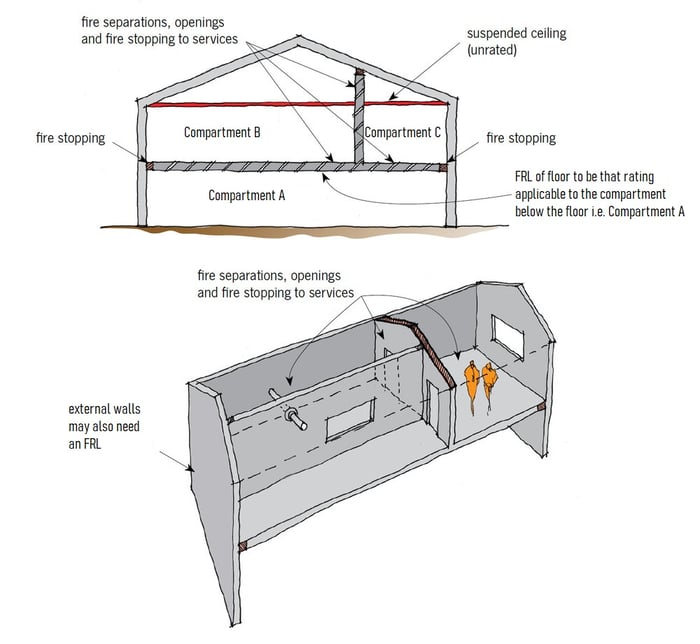
What will we identify in a passive register?
Every visible/accessible penetration can be individually documented with a recommendation on how to rectify the identified defect. We log all penetrations into a register that forms part of your ongoing building management suite alongside your Hazmat Report and other Safety and Compliance documentation.
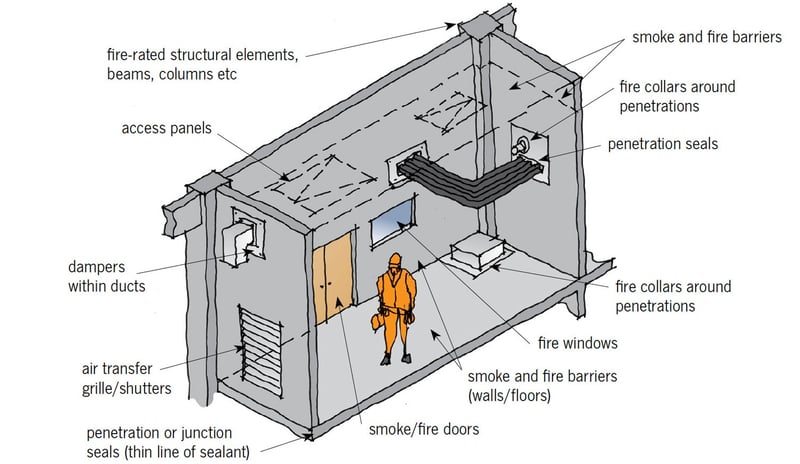
Service Penetrations
Not limited to: Electrical, Data, Fire Services, Mechanical (dampers, wiring and pipework), Hydraulic and other services in your building.
Construction Defects
We will identify any gaps and openings that can lead to fire and smoke spread into adjacent compartments of the building and recommend means to remedy the issues.
Other Separations
We can identify and document lightweight passive construction systems and identify the FRL (Fire Resistance Level) achieved by systems in line with the intent of the structure.
Get a Passive Register for your Site
Get in touch via the Contact Us page and we can provide further information to suit your needs.
